气体传感器BME690
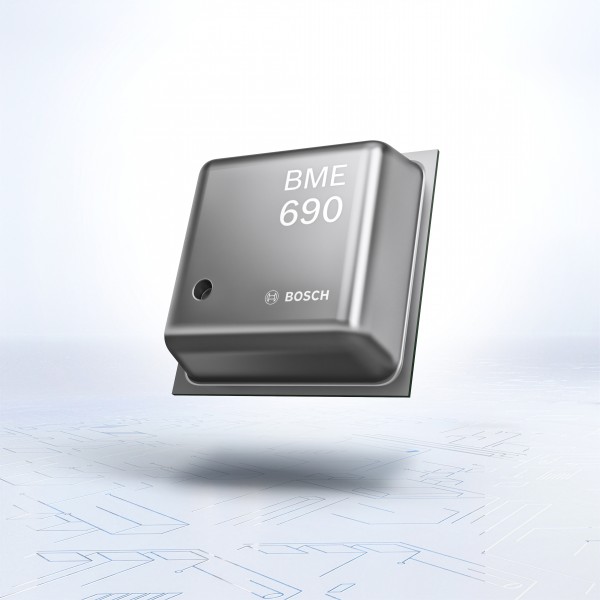
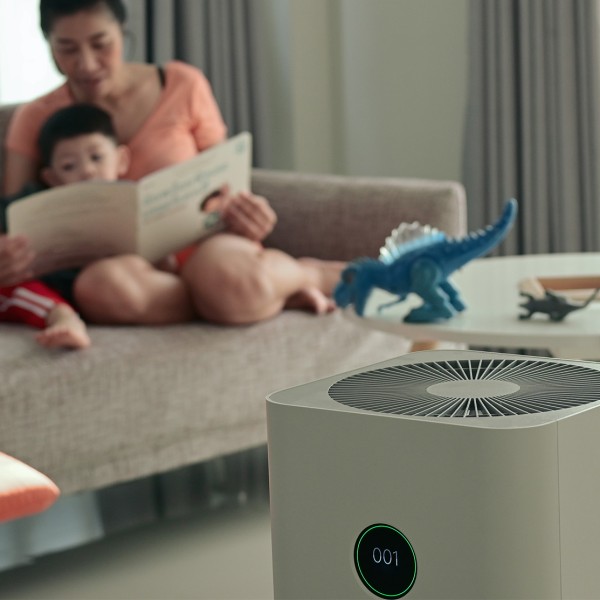

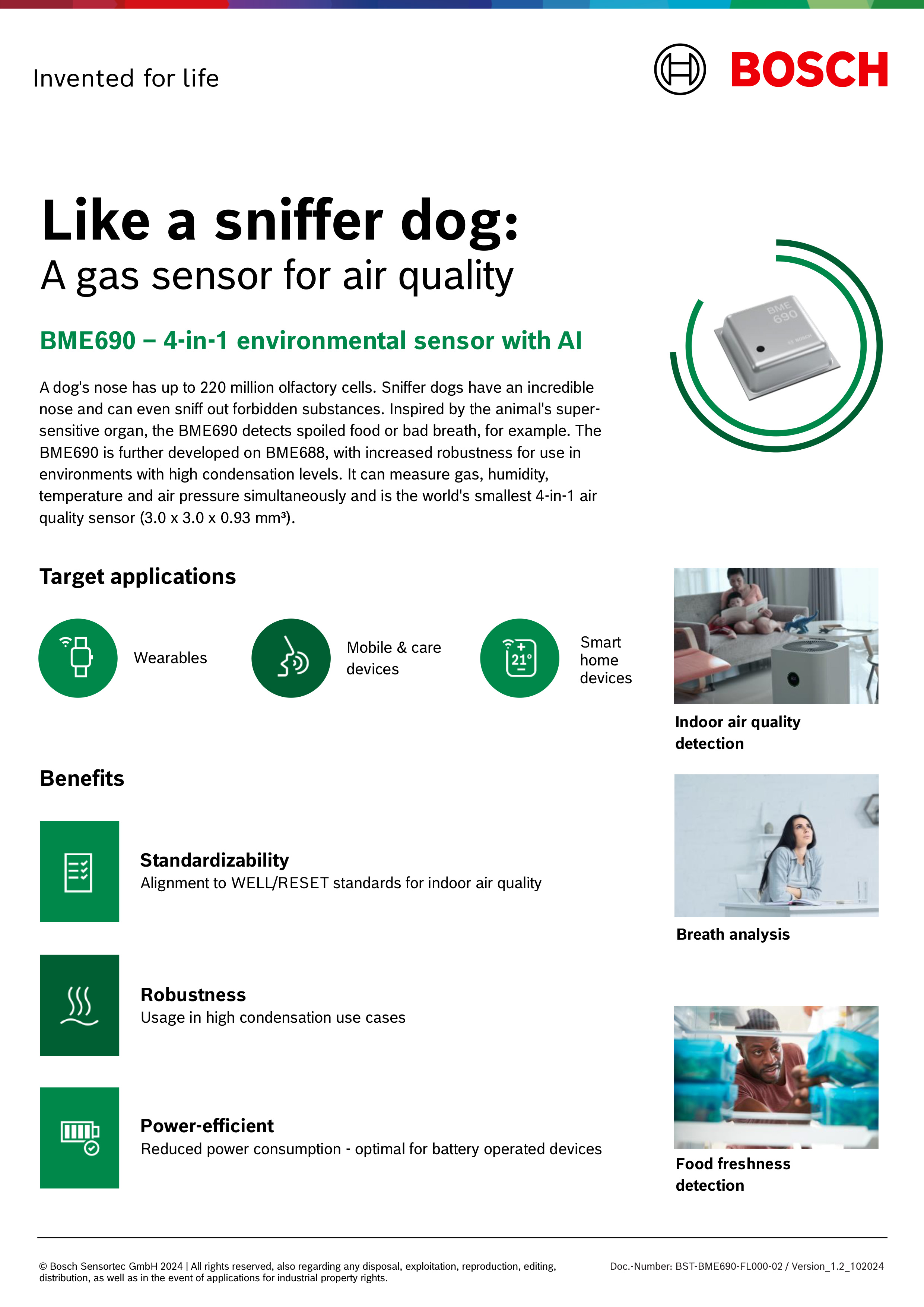
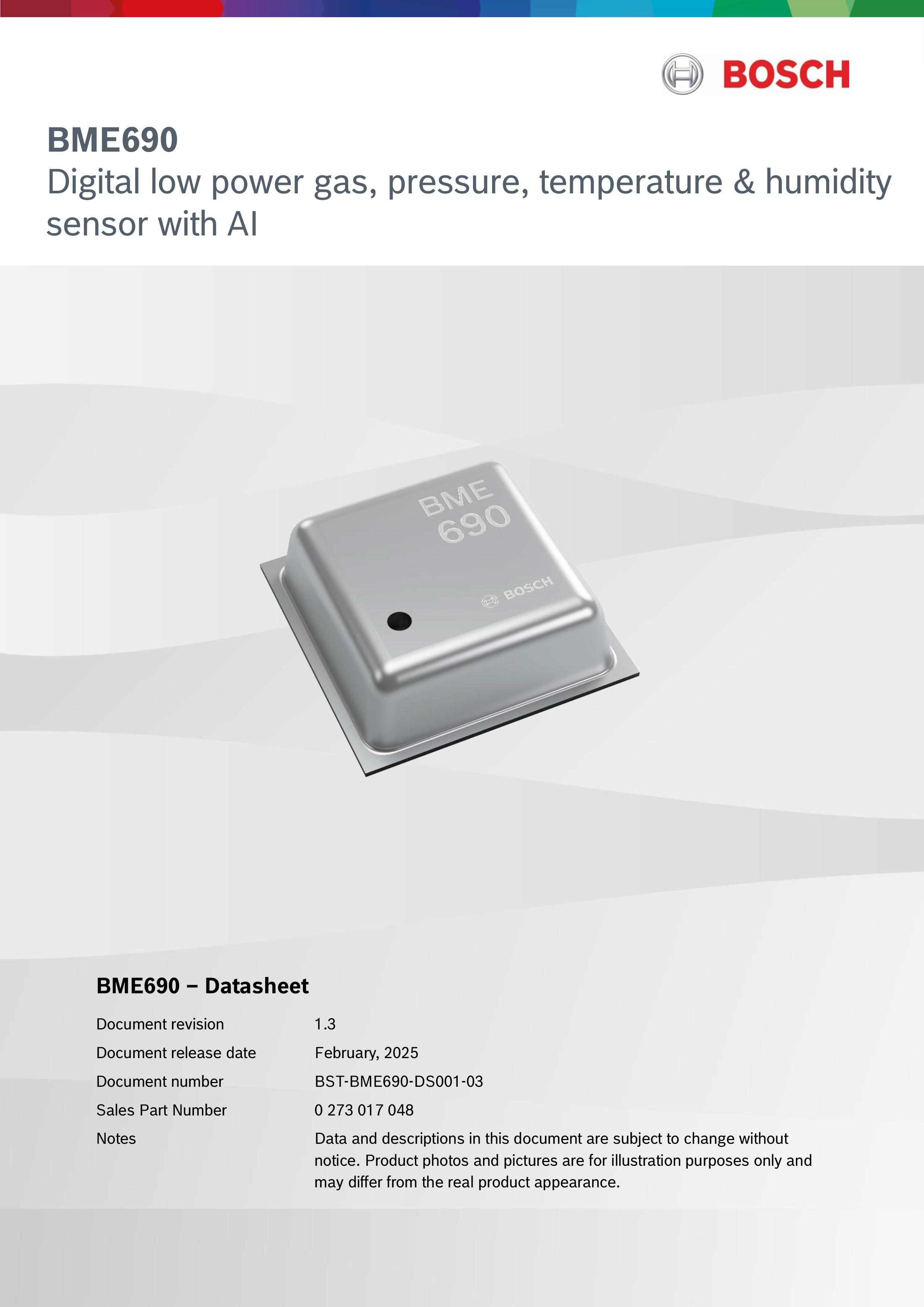
BME690是小巧的四合一空气质量传感器,用于监测室内空气质量,能够检测挥发性有机化合物(VOC)、挥发性硫化合物(VSC)及其他气体。BME690是基于BME688进一步开发的型号,耐用性增强,适用于高冷凝水平的环境。
- 标准化能力
- 稳健性
- 高能效
| In stock | |||
|---|---|---|---|

|
Out of stock | 0 pieces | Not available |

|
Out of stock | 0 pieces | Not available |

|
Out of stock | 0 pieces | Not available |

|
Out of stock | 0 pieces | Not available |

|
Out of stock | 0 pieces | Not available |



技术数据
8引脚金属LGA封装
湿度0…100%
温度:-40…85°C
电源电压VDD
1.71 ...3.6 V
对于p/T,1 Hz时为3.1 µA
对于h/p/T,1 Hz时为4.2 µA
对于p/h/T/空气质量,ULP模式下为50 µA
对于p/h/T/空气质量,LP模式下为0.5 mA
标准气体扫描模式下为3.1 mA
传感器间偏差(IAQ)
IAQ操作模式
主要传感器输出
± 15% ± 15 IAQ
3秒(LP)和300秒(ULP)
空气质量指数(IAQ)、bVOC和CO2当量(ppm)
响应时间
精度公差
滞后
1秒(τ0-63%)
± 3%相对湿度
± 1 %相对湿度
相对精度
绝对精度
温度系数偏移
± 0.05 hPa
± 0.5 hPa
±1.3 Pa/K(温度变化1°C时,等效高度变化±10.9 cm)
绝对精度
±0.5 °C (0-65°C)







准备好更深入探索我们的传感器世界了吗?
与我们的开发者社区建立联系,分享您的专业知识,共同探索传感器技术的最新成果。立即加入 Bosch Sensortec 社区,并获取独家资源、洞见和讨论
FAQs for the BME690
The BME690 is designed for applications such as indoor air-quality monitoring, odor and bad-smell detection, detection of unusual gases, spoiled-food detection, smart-home devices and wildfire detection.
The BME690 uses a configurable gas-scanning approach combined with AI-based software to classify different gas compositions. Selectivity is achieved by operating the gas-sensitive layer at different temperatures to create characteristic gas fingerprints.
Yes. Bosch BME AI-Studio can be used to develop, verify and deploy custom gas classification and regression use cases for the BME690.
The BME690 can be used with the Bosch sensor API for raw sensor access and BSEC for fused outputs, gas classification and environmental processing.
Yes. BSEC provides an ultra-low-power mode specifically intended for battery-powered or intermittently operated devices over extended periods.